GLP1/GIP Therapy Eye Safety Confirmed
Rapid glucose lowering with weight loss drugs worries retina specialists about worsening diabetic retinopathy. Semaglutide trials raised concerns but tirzepatide data stayed limited until now. Endocrinologists need clear risk numbers before prescribing widely. A large study published in the Ophthalmology settles the question with real-world outcomes.
Massive Propensity Matched Analysis
Researchers used TriNetX US Collaborative Network for retrospective cohort study. They enrolled diabetics with overweight or obesity starting tirzepatide therapy. Propensity score matching balanced 86,923 tirzepatide patients against 86,923 lifestyle intervention patients. Mean age reached 56.9 plus or minus 12.7 years. Women made up 52.0% of cohort.
All DR Events Drop Significantly
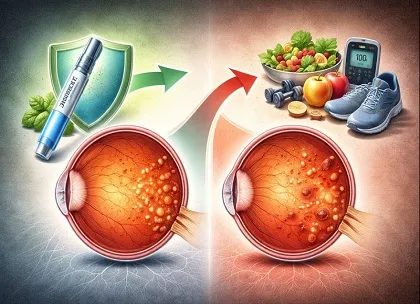
Tirzepatide cut 12-month risk across retinopathy spectrum versus lifestyle controls. Incident mild NPDR showed relative risk 0.864 with 95% CI 0.758-0.985. Proliferative DR dropped to RR 0.705 with 95% CI 0.564-0.882. DR with macular edema fell to RR 0.624 with 95% CI 0.536-0.727.
Severe Complications Plummet
Vitreous hemorrhage risk measured RR 0.607 with 95% CI 0.429-0.860. Tractional retinal detachment plunged to RR 0.370 with 95% CI 0.179-0.765. Intravitreal anti-VEGF injections decreased to RR 0.479 with 95% CI 0.368-0.625. Pan-retinal photocoagulation needs dropped to RR 0.610 with 95% CI 0.403-0.924.
Prescribe Confidently to High-Risk Eyes
Retina protection favors tirzepatide over lifestyle alone dramatically. Baseline fundus photos guide therapy not deter it. Weight loss benefits outweigh theoretical worsening risks clearly.
Screen Before Starting Therapy
Annual dilated exams monitor safely during titration. Rapid HbA1c drops happen first months when vigilance matters most. Findings reassure across obesity-diabetes spectrum.
Economic Win Reduces Injections
Fewer anti-VEGF treatments save vision and healthcare dollars. Laser sessions decline too. Dual metabolic-eye benefits justify formulary priority.
Guidelines Should Reflect New Data
ADA standards need tirzepatide eye safety endorsement now. Ophthalmologists endorse alongside endocrinologists confidently.
Featured
Off
Page Content
#ffffff
Anonymous user
On
Authenticated user
On
Premium
On
Paid / Sponsored
On
Key highlights
- TriNetX retrospective cohort matched 86,923 tirzepatide patients to 86,923 lifestyle therapy controls (mean age 56.9±12.7 years, 52% women) for DR outcomes.
- Tirzepatide reduced 12-month incident mild NPDR risk by 14% (RR 0.864, 95% CI 0.758-0.985) compared to lifestyle intervention alone.
- Proliferative DR risk fell 30% (RR 0.705, 95% CI 0.564-0.882) and DR with macular edema dropped 38% (RR 0.624, 95% CI 0.536-0.727) with tirzepatide.
- Serious complications including vitreous hemorrhage (RR 0.607), tractional retinal detachment (RR 0.370), and intravitreal anti-VEGF injections (RR 0.479) decreased significantly.
- Tirzepatide demonstrated lower incidence of new or progressive diabetic retinopathy plus reduced intervention needs versus lifestyle therapy in obese diabetic patients.
Source
Shah J, Razavi P, Festok M, et al. Tirzepatide and Reduced Risk of Diabetic Retinopathy and Related Complications: A Multicenter U.S. Cohort Study. Ophthalmology. Published online January 2026. doi: https://doi.org/10.1016/j.ophtha.2026.01.013
Thumbnail
Speciality
Currency
Sub Speciality
Sub Sub Speciality
Short Description
TriNetX cohort of 173,846 obese diabetics finds tirzepatide reduces DR incidence (RR 0.864), proliferative DR (RR 0.705), macular edema (RR 0.624), and interventions vs lifestyle therapy alone.
User Segments
Release Date
Featured Order
0
Is Paid
0
Send Notification
Off