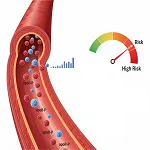
A major prospective study using data from over 200,000 UK Biobank participants has identified that the total number of apolipoprotein B-containing particles (apoB-P), rather than their type or size, is the most reliable predictor of future coronary artery disease (CAD). The findings suggests tthe central role of apoB-P in cardiovascular risk stratification and highlight the added prognostic importance of lipoprotein(a) [Lp(a)]. The results were reported in European Heart Journal.
Researchers analyzed data from 207,368 adults without prior atherosclerotic disease, diabetes, or lipid-lowering treatment at baseline. Participants underwent advanced nuclear magnetic resonance (NMR) lipoprotein profiling for detailed evaluation of apoB particle count, lipoprotein subtypes such as LDL and VLDL, particle size, and Lp(a) levels.
A one standard deviation (SD) increase in apoB-P was associated with a 33% increase in CAD risk (HR: 1.33; 95% CI: 1.30–1.36), making it the strongest single lipid-related risk factor observed. When accounting for particle abundance, VLDL and LDL both contributed to risk, but total apoB-P remained the superior indicator.
Particle size and subclass distinctions provided no additional predictive value for CAD once apoB-P was accounted.
Lp(a) maintained a strong and independent association with CAD even after adjusting for apoB-P (HR: 1.18; 95% CI: 1.16–1.20), marginally improving risk prediction models (AUC from 0.769 to 0.774; P < .001).