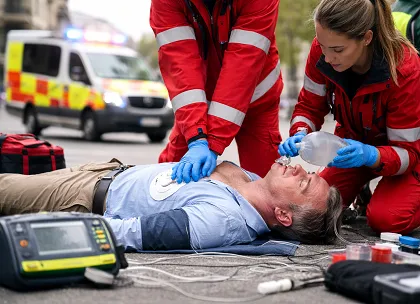
Out-of-hospital cardiac arrest (OHCA) survivors face cognitive and mental health challenges. Fatigue often persists months later. In a study published in the International Journal of Cardiology, the researchers sought in-hospital factors linked to fatigue at three months post-OHCA.
This prospective cohort study spanned three Danish heart centers. In-hospital, 173 survivors got screened for cognition (Montreal Cognitive Assessment), anxiety/depression (Hospital Anxiety and Depression Scale), and traumatic distress (Impact of Event Scale-Revised). At three months, fatigue used Fatigue Severity Scale (FSS), with ≥4 signaling clinical importance. Logistic regression tested links after adjustments.
Mean age was 63.1 ± 11.7 years. Median FSS score hit 3.2 (IQR 2-9); 42% had FSS ≥4. Fatigued survivors were often female, had longer stays, more in-hospital anxiety/depression/traumatic distress, poorer sleep, and lower quality of life. After adjustments for age, sex, stay length, anxiety, depression, sleep, only traumatic distress independently tied to FSS ≥4 (OR 4.6, 95% CI 1.5-14.7, p=0.009).
These cohort findings show in-hospital traumatic distress associated with higher fatigue odds three months post-OHCA. Over a third reported notable fatigue. Results highlight potential screening value, pending further intervention trials.