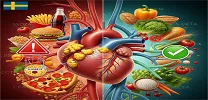
A new large-scale Swedish study published in Cardiovascular Research shows that poor dietary habits, particularly low-fiber diets higher in red and processed meats, may lead to the formation of dangerous coronary plaques, even in adults without diagnosed cardiovascular disease. The findings, from the SCAPIS (Swedish CArdioPulmonary BioImage Study), suggest how diet directly impacts heart artery health.
Researchers analyzed data from over 24,000 adults aged 50–64 who had no known heart disease. Participants were assessed using coronary computed tomography angiography (CCTA) to detect signs of coronary atherosclerosis, including the presence of high-risk plaques.
The study used a dietary index (DI) to categorize participants based on their adherence to an anti-inflammatory diet rich in plant-based foods and low in red or processed meats and sugary drinks. Those with the lowest DI were more likely to be male, younger, smokers, have higher waist circumference, elevated triglycerides, and higher blood pressure.
The study found significant differences between dietary groups. Coronary plaque was found in 44.3% of individuals in the lowest diet quality group versus 36.3% in the highest. Significant artery narrowing (≥50% stenosis) appeared in 6.0% of the poor-diet group compared to 3.7% in the healthier eaters. High-risk, non-calcified plaques were found in 1.5% of the lowest DI group versus 0.9% in the healthiest diet group.
After adjusting for key risk factors like age, sex, and smoking, the study found that poor diet remained significantly associated with high-risk plaque features.