Amino Acids Flag Kidney Decline
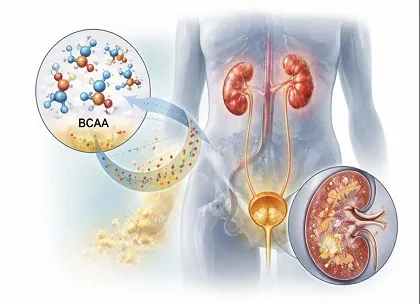
Nephrologists see type 2 diabetes drive chronic kidney disease faster than ever. Preclinical work points to branched-chain amino acid metabolism as key player. Doctors need clinical markers to spot progressors early. This study published in the Diabetes links urinary BCAAs directly to hard renal outcomes in diabetics.
Large Outpatient Diabetes Cohort
Researchers measured baseline urinary BCAAs using mass spectrometry in 1,868 type 2 diabetes outpatients carefully. They tracked composite renal endpoint over median 7.2 years follow-up. Outcomes included end-stage kidney disease with eGFR below 15 mL/min/1.73 m2, dialysis start, renal death, or serum creatinine doubling. Total renal events reached 203 during observation period.
Each BCAA Raises Risk 29-31%
One standard deviation increase in urinary valine linked to 1.29-fold higher composite risk with 95% CI 1.11-1.51 after full adjustment. Leucine showed 1.31-fold risk with 95% CI 1.11-1.55. Isoleucine carried 1.29-fold risk with 95% CI 1.09-1.53. These associations held across all three BCAAs consistently.
Inflammation Carries BCAA Signal
Mediation analysis revealed urinary MCP-1 explained key effects strongly. Valine effects ran 57% through MCP-1 pathway. Leucine mediated 47% via this route. Isoleucine showed 58% MCP-1 mediation. Intrarenal inflammation links BCAA dysregulation to progression clearly.
US Data Confirms Pattern
Chronic Renal Insufficiency Cohort in U.S. validated high urinary BCAAs predict CKD worsening independently. Findings cross-validate across populations reliably. Kidney BCAA metabolism affects inflammation and scarring directly.
Spot Progressors Through Urine Tests
Check urinary BCAAs in high-risk diabetes clinics routinely. Rising levels warn of faster decline before eGFR drops. Combine with MCP-1 for inflammation confirmation. Early intervention may slow trajectory.
Target BCAA Pathways in Trials
Drug development should test BCAA catabolism activators in diabetes CKD now. Preclinical promise meets clinical risk signals perfectly. Patient selection using urinary markers sharpens trial focus.
Nephrologists Must Act Early
Diabetes drives 40% of end-stage kidney disease cases. BCAA excretion offers new progression biomarker beyond albuminuria. Monitor trends yearly in stable outpatients.
Diet and Drugs Both Matter
Dietary BCAA restriction joins SGLT2 inhibitors and GLP1 agonists for protection. Multicenter trials test combination strategies next. Urine BCAAs guide personalized approaches effectively.
Simple Test Changes Practice
Mass spectrometry BCAAs become practical with wider access. Risk stratification improves dramatically for diabetes kidney clinics worldwide.
Featured
Off
Page Content
#ffffff
Anonymous user
On
Authenticated user
On
Premium
On
Paid / Sponsored
On
Key highlights
- Researchers measured baseline urinary BCAAs by mass spectrometry in 1,868 type 2 diabetes outpatients and followed for median 7.2 years, identifying 203 composite renal events.
- One SD higher urinary valine associated with 1.29-fold increased CKD progression risk (95% CI 1.11-1.51), leucine with 1.31-fold (1.11-1.55), and isoleucine with 1.29-fold (1.09-1.53) after adjustment.
- Mediation analysis showed urinary MCP-1 explained 57% of valine effects, 47% of leucine effects, and 58% of isoleucine effects on renal outcomes.
- High urinary BCAAs independently predicted CKD progression in the U.S. Chronic Renal Insufficiency Cohort, confirming findings across populations.
- Dysregulated intrarenal BCAA metabolism appears to drive inflammation and CKD progression in type 2 diabetes patients.
Source
Liu JJ, Liu S, Zheng H, et al. Urinary Branched-Chain Amino Acid Excretion and Chronic Kidney Disease Progression in Patients With Type 2 Diabetes. Diabetes. 2025;75(2):351-360. doi: https://doi.org/10.2337/db25-0782
Thumbnail
Speciality
Currency
Sub Speciality
Sub Sub Speciality
Short Description
Urinary BCAAs Predict 30% Higher CKD Risk in DiabetesJapanese study of 1,868 T2D patients finds 1 SD higher urinary valine/leucine/isoleucine ties to 29-31% increased CKD progression risk over 7.2 years, MCP-1 mediates 47-58%.
User Segments
Release Date
Featured Order
0
Is Paid
0
Send Notification
Off