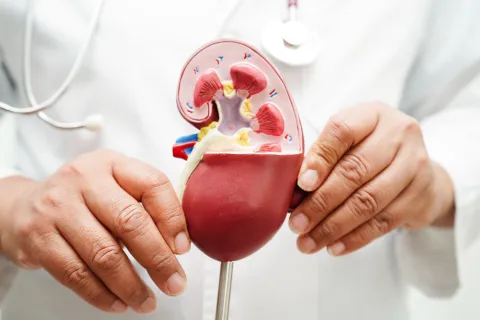
Diabetic kidney disease (DKD) is a major microvascular complication of diabetes mellitus and remains the leading cause of chronic kidney disease and end-stage kidney disease worldwide. Current clinical markers have limited sensitivity for early detection and prognosis, prompting interest in metabolomic approaches to identify biomarkers associated with disease progression. An analysis published in Frontiers in Endocrinology evaluated urinary metabolic alterations associated with DKD progression.
The study included 96 patients with biopsy-confirmed type 2 diabetes-related nephropathy (T2DN), 76 patients with type 2 diabetes mellitus (T2DM), and 79 healthy controls (HC). Untargeted urinary metabolomics was performed to identify differential metabolites, followed by pathway and network analyses. Prognostic metabolites were evaluated using Cox regression and Kaplan-Meier survival analyses adjusted for confounders, and associations with renal histopathology were examined using partial Spearman correlation. For key prognostic metabolites, targeted quantification in urine and plasma was conducted for validation.
Among 148 detected metabolites, 101 differed significantly across groups, spanning multiple metabolic pathways. Amino acid metabolism, particularly branched-chain amino acid pathways, showed progressive changes along the HC-T2DM-T2DN continuum. Urinary isoleucine emerged as the top prognostic metabolite (HR 2.18; 95% CI 1.18-4.03; P = 0.013). Isoleucine levels stratified renal survival in T2DN (log-rank P < 0.001) and correlated with four renal histological scores that capture renal structural damage and disease progression. Targeted quantification confirmed these findings and showed that urinary, but not plasma, isoleucine was prognostically relevant.
These findings identify urinary isoleucine as a non-invasive biomarker associated with DKD progression in individuals with biopsy-confirmed disease.