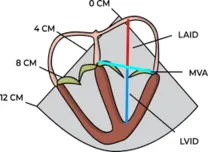
A large-scale UK Biobank analysis reveals that ventricular geometry—the structural characteristics of the heart’s main pumping chamber—plays a central role in shaping brain architecture and cognitive performance. The findings were presented at the European Society of Cardiology Congress 2025.
The study evaluated 15,519 participants (median age 64 years; 49% female) free of stroke or neurodegenerative disease. Using cardiovascular magnetic resonance imaging, researchers derived three latent cardiac phenotypes—systolic function (gSyst), diastolic function (gDiast), and geometry (gGeom)—and assessed their associations with brain MRI parameters and cognitive outcomes.
Among these, gGeom emerged as the strongest and most consistent predictor. Individuals with larger ventricular mass, wall thickness, and cavity size exhibited higher hippocampal volume (β=0.082, P=1.12×10⁻⁸ in females) and better cognitive scores, including fluid intelligence and reaction time. Mediation analysis confirmed that hippocampal volume partly explained this beneficial relationship.
Conversely, systolic and diastolic function, as well as arterial stiffness, showed weaker links to brain measures. These findings underscore the integrative nature of cardiovascular and neurological health, positioning heart geometry as a potential biomarker for cognitive resilience.