Telehealth Tests T1D Pump Management
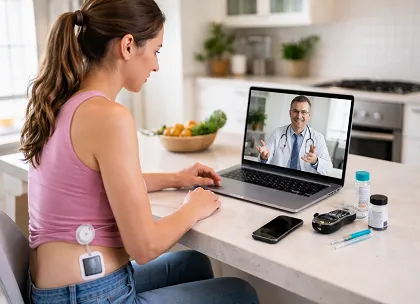
Type 1 diabetes patients on insulin pumps need frequent adjustments for optimal control. Clinic visits burden patients and healthcare systems alike. Video consultations promise equal care with less travel. This trial compares one year of virtual versus in-person follow-up directly. The results of the trial were published in the Diabetologia.
Randomized Trial Mirrors Real Practice
Researchers at Hospital of Southern Jutland enrolled adults with type 1 diabetes using insulin pumps for at least 6 months. Total participants reached 76 randomized 1:1 to video or physical consultations. Stratification matched continuous glucose monitor versus flash glucose monitor users. Open-label design reflected routine care delivery.
Time in Range Stays Identical
Primary outcome measured percentage time in range from week 51 to 52 using continuous glucose monitoring. Video group achieved least square mean TiR of 64.3%. Control group hit 63.5%. Difference measured 0.8 percentage points with 95% CI minus 5.3 to 6.9 and p=0.25. ANCOVA confirmed non-inferiority clearly.
Satisfaction and HbA1c Favor Video
Treatment satisfaction improved significantly in video arm. HbA1c dropped more with virtual care. Quality of life impact proved worse in intervention group however. Completion rates stayed high at 32 of 38 video patients and 31 of 38 controls.
Virtual Care Fits Pump Patients
Median age 49 years with 51% women mirrors typical pump populations. One-year data supports video equivalence for glycemic control. Travel time savings benefit working adults most.
Expand Tele-Endocrinology Now
Weekly video check-ins maintain TiR without office visits. HbA1c gains plus satisfaction boost justify rollout. Quality of life concerns need attention through better virtual engagement.
Hybrid Models Win Long-Term
Combine quarterly in-person with monthly video for optimal balance. Findings guide diabetes center scheduling immediately.
TiR Drives Decision Making
Primary endpoint equivalence validates telehealth across pump settings. Secondary gains tip balance toward virtual platforms.
Featured
Off
Page Content
#ffffff
Anonymous user
On
Authenticated user
On
Premium
On
Paid / Sponsored
On
Key highlights
- 52-week open-label RCT randomized 76 adult T1D insulin pump patients 1:1 to video versus physical consultations, stratified by glucose sensor type from Hospital of Southern Jutland.
- Primary endpoint percentage time in range at weeks 51-52 showed 64.3% in video group versus 63.5% in control (difference 0.8%, 95% CI −5.3 to 6.9, p=0.25) via ANCOVA.
- Video consultations demonstrated superior treatment satisfaction and greater HbA1c reduction compared to physical consultations over one year.
- Intervention group experienced inferior quality of life impact despite glycemic equivalence and high completion rates (32/38 video, 31/38 control).
- Video care provides non-inferior TiR with added satisfaction and HbA1c benefits for T1D pump patients, supporting expanded telehealth use.
Source
Schultz ANØ, Christensen R, Bollig G, Kidholm K, Brandt F. Effectiveness of video consultations in type 1 diabetes patients treated with insulin pumps in the outpatient clinic: a randomised controlled trial. Diabetologia. 2025;69(2):321-329. doi: https://doi.org/10.1007/s00125-025-06585-2
Thumbnail
Speciality
Currency
Sub Speciality
Sub Sub Speciality
Short Description
52-week RCT of 76 T1D pump patients finds video consultations match physical care for TiR (64.3% vs 63.5%, p=0.25) but improve satisfaction and HbA1c despite QoL drop.
User Segments
Release Date
Featured Order
0
Is Paid
0
Send Notification
Off