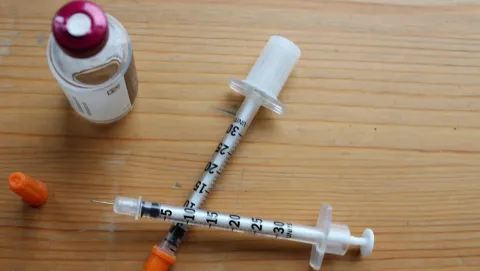
For adults with type 2 diabetes mellitus (T2DM) receiving basal insulin therapy, new agents designed for less frequent dosing require careful evaluation of safety, tolerability, and glucose-lowering effects. In Diabetes Research and Clinical Practice, findings are reported from a randomized, active-controlled, phase 1b trial assessing multiple ascending doses of GZR4 in this population.
The study enrolled adults with T2DM on stable daily basal insulin therapy. Participants were randomized in a 3:1 ratio within three cohorts to receive a fixed once-weekly dose of GZR4 or once-daily insulin degludec (IDeg) administered subcutaneously for six weeks. Primary endpoints included the incidence of adverse events, serious adverse events, and hypoglycemia.
Across all treatment groups, the most frequently reported treatment-emergent adverse event was hypoglycemia, with no serious adverse events or severe hypoglycemia observed. At steady state, the mean maximum plasma concentration of GZR4 ranged from 289.0 ± 17.1 to 1016.0 ± 262.4 ng/mL, and mean area under the concentration–time curve from 0 to 168 hours ranged from 34,449.6 ± 2,055.7 to 137,064.2 ± 41,496.5 h·ng/mL.
From baseline to week 6, mean fasting plasma glucose decreased by −1.77 ± 0.20 to −2.75 ± 0.71 mmol/L in the GZR4 groups compared with −1.12 ± 0.36 mmol/L in the IDeg group. Corresponding reductions in glycated hemoglobin ranged from −0.38 ± 0.64 % to −0.76 ± 0.14 % with GZR4 versus −0.13 ± 0.21 % with IDeg. These findings indicate that GZR4 was safe and well tolerated, with pharmacokinetic and pharmacodynamic properties supporting once-weekly dosing in patients with T2DM.