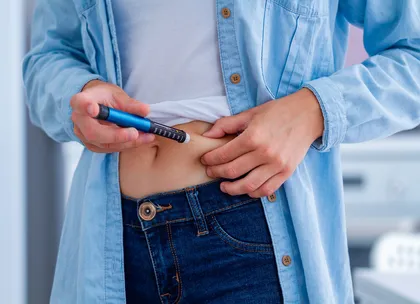
Switching from daily basal insulin to once-weekly insulin therapy may simplify diabetes management, although concerns remain regarding glycemic stability during treatment transition. The phase 3b ONWARDS 10 trial, published in Diabetes, Obesity and Metabolism, evaluated whether insulin icodec could be initiated without a 1-time additional loading dose in adults with basal-insulin-treated type 2 diabetes mellitus (T2DM).
The 26-week, open-label, treat-to-target trial randomized 412 adults with glycated hemoglobin (HbA1c) levels between 7.0% and 10.0% to once-weekly insulin icodec or once-daily insulin glargine U100. The primary endpoint was the change in HbA1c from baseline to week 26, while secondary endpoints included the change in time in range (TIR) and rates of clinically significant or severe hypoglycemia.
Findings
- Mean HbA1c decreased from 8.1% to 7.2% with insulin icodec and from 8.0% to 7.5% with insulin glargine U100 at week 26.
- Estimated treatment difference (ETD) for HbA1c change was −0.2%-points (95% confidence interval [CI] −0.4 to −0.1), confirming noninferiority of insulin icodec versus insulin glargine U100 (P < 0.0001).
- Improvement in time in range (TIR) from baseline to weeks 22-26 was greater with insulin icodec than with insulin glargine U100 (18.0%-point vs 12.1%-point increase; ETD 5.9%-points; 95% CI 2.6-9.2; P = 0.0005).
- Self-measured blood glucose levels did not increase following initiation of insulin icodec without the additional loading dose.
- Rates of combined clinically significant or severe hypoglycemia were numerically lower with insulin icodec than with insulin glargine U100 (0.45 vs 0.59 episodes per patient-year of exposure).
Once-weekly insulin icodec maintained glycemic control without requiring a one-time additional starting dose in adults switching from daily basal insulin therapy. The regimen also improved TIR compared with insulin glargine U100 without increasing the risk of hypoglycemia.