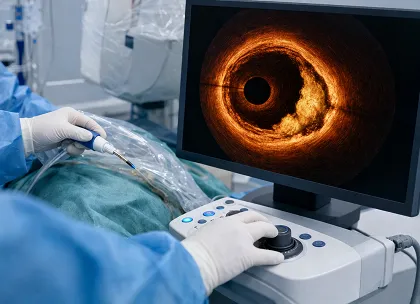
Intracoronary imaging–derived plaque features show consistent associations with future cardiovascular events across observational studies. Intravascular imaging modalities, including optical coherence tomography (OCT) and intravascular ultrasound (IVUS), enable characterization of coronary plaque vulnerability. This updated meta-analysis, published in Heart, evaluated the prognostic relevance of imaging-derived plaque features for predicting MACE in untreated coronary lesions.
A systematic search of PubMed, Scopus, and Google Scholar was conducted according to Preferred Reporting Items for Systematic Reviews and Meta-Analyses (PRISMA) guidelines. Adjusted observational studies assessing plaque characteristics using OCT or IVUS and reporting MACE outcomes were included. Hazard ratios (HRs) were pooled using fixed-effects or random-effects models based on heterogeneity. Subgroup and sensitivity analyses examined the impact of imaging modality and plaque feature definitions.
A total of 12 studies including 8453 patients and 22,319 lesions were analyzed. All evaluated plaque features were significantly associated with increased risk of MACE. Thin-cap fibroatheroma (TCFA) showed an HR of 3.06 (95% CI 1.97–4.77), while plaque burden showed an HR of 3.92 (95% CI 1.45–10.59). IVUS-derived parameters, including minimum lumen area and high-risk plaque definitions, demonstrated stronger associations compared with OCT-derived measures, whereas OCT better identified TCFA. Combined assessment using minimum lumen area, TCFA, and lipid arc showed the highest predictive performance.