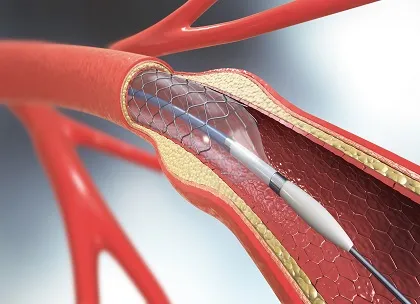
Periprocedural ischemic complications continue to pose a clinical challenge in patients with chronic coronary syndrome (CCS) undergoing elective percutaneous coronary intervention (PCI). The ALPHEUS-stents study, published in the International Journal of Cardiology, evaluated whether stent-related factors, particularly total stent length and device characteristics, are associated with ischemic events occurring shortly after PCI.
This analysis included patients with CCS undergoing elective PCI who had at least one high-risk feature. The primary endpoint was a composite of type 4a or 4b myocardial infarction (MI) and major periprocedural myocardial injury assessed within 48 hours or at hospital discharge.
Multivariable logistic regression models were used to examine the association between total stent length, treated as a continuous variable, and outcomes, adjusting for relevant clinical covariates. Additional analyses evaluated stent characteristics including diameter, strut thickness, platform composition, polymer type, coating distribution, and eluted drug type.
The primary endpoint occurred in 639 patients (35.8%). After adjustment, total stent length was associated with the primary endpoint, with an adjusted odds ratio (aOR) of 1.028 (95% CI 1.028–1.029) per millimeter increase.
No significant associations were observed for stent diameter, strut thickness, platform composition, or coating distribution. However, the use of biolimus-eluting stents was associated with the primary endpoint compared with other drug-eluting stents (aOR 1.051; 95% CI 1.035–1.067; p=0.006).
These findings indicate that total stent length was a key factor associated with periprocedural ischemic events following elective PCI. Biolimus-eluting stents were also associated with the primary endpoint, although further evaluation is warranted.