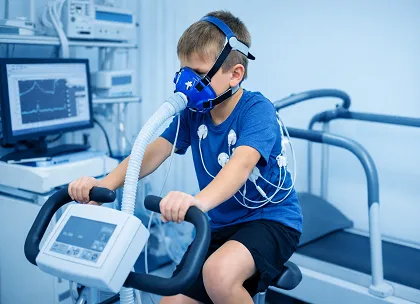
Cardiopulmonary exercise testing (CPET) provides key benchmarks for evaluating aerobic fitness, with values in children and adolescents varying as physiological parameters change with growth. A systematic review published in the European Journal of Preventive Cardiology evaluated updated pediatric-specific CPET reference values and assessed variability across study populations. The review followed PRISMA guidelines and included observational studies published between
February 1, 2019, and December 31, 2025, across six scientific databases. Eligible studies included healthy participants aged <18 years undergoing maximal CPET.
Fifteen studies comprising 12,083 participants (49.4% female) were included. Recruitment settings varied, including hospital-based (n=6), community-based (n=8), and athlete-specific cohorts (n=1). Six studies reported ethnicity, with most participants classified as White, while one study included obese or overweight or athletic pediatric cohorts. Primary outcomes focused on peak oxygen uptake (V̇O2peak), with additional measures including peak heart rate and peak ventilation. Normative V̇O2peak values ranged from 26.0 to 56.3 mL·kg⁻¹·min⁻¹, peak heart rate from 175 to 199 beats per minute, and peak ventilation from 52.2 to 96.0 L·min⁻¹. Reference equations were developed in 11 studies, with validation performed in five.
High heterogeneity was observed across studies of high (n=2), moderate (n=9), and low quality (n=4). Risk of bias assessment using ATS/ACCP and JBI tools was often disregarded, although study quality did not influence reported outcomes. Representation of obese or overweight children and non-White populations remained limited.
Pediatric CPET reference values demonstrate substantial variability across cohorts. CPET reference values should be selected from cohorts that closely match patient characteristics.