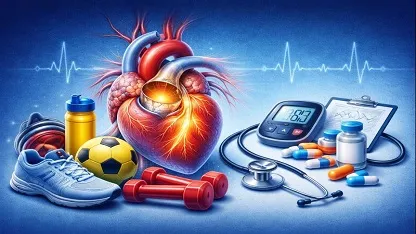
1. What is sports cardiology?
Sports cardiology is a medical specialty focused on keeping the hearts of athletes and physically active people healthy while they train, compete, and exercise safely.
2. Who is a sports cardiologist?
A sports cardiologist is a heart doctor trained to understand how exercise affects the heart and to guide athletes with normal adaptations or heart conditions.
3. Why do athletes need special heart care?
Regular intense exercise changes the heart. These changes are often healthy, but sometimes they can look like heart disease, so expert evaluation is important.
4. How does exercise change the heart?
Exercise can make the heart chambers slightly larger, the walls a bit thicker, and the heart more efficient at pumping blood—this is usually normal in athletes.
5. What is “athlete’s heart”?
Athlete’s heart is a normal response to long-term training where the heart adapts to handle higher physical demands without disease.
6. Can a healthy athlete’s heart look like heart disease?
Yes. Some normal exercise-related changes can resemble heart conditions on ECGs or scans, which is why careful interpretation is needed.
7. What is a preparticipation heart check?
It is a medical check done before sports participation to detect hidden heart problems that could cause symptoms or sudden collapse during exercise.
8. What tests are usually done in athletes?
Most evaluations start with medical history, family history, physical examination, and an ECG. Further tests are done only if needed.
9. Why is an ECG important for athletes?
An ECG records heart electrical activity and can detect rhythm problems or inherited conditions that may increase risk during intense exercise.
10. Do children and teenagers need different heart evaluations?
Yes. Children’s hearts respond differently to exercise, and adult ECG rules may not apply, so pediatric athletes need age-appropriate evaluation.
11. When is an echocardiogram needed?
An echocardiogram (heart ultrasound) is used when ECG findings are unclear or when doctors need to look closely at heart structure and function.
12. What role do MRI or CT scans play?
Advanced scans help doctors clearly distinguish normal athlete’s heart from real heart disease when other tests are inconclusive.
13. Can athletes have heart disease without symptoms?
Yes. Some heart conditions cause no symptoms initially, which is why screening and proper evaluation are important, especially in competitive sports.
14. What happens if a heart condition is found?
The sports cardiologist assesses the risk and discusses whether it is safe to continue sports, modify training, or temporarily stop competition.
15. What is shared decision-making?
It means the athlete, doctor, and sometimes family discuss risks and benefits together to make informed choices about sports participation.
16. Can athletes with heart disease still exercise?
In many cases, yes. Exercise can often be continued safely with personalized guidance rather than complete restriction.
17. Does exercise help prevent heart disease?
Yes. Regular physical activity lowers the risk of heart attacks, stroke, and blocked arteries, even starting from young adulthood.
18. Is high-intensity exercise always dangerous?
No. When properly supervised and suited to the individual, even high-intensity exercise can improve heart health.
19. Are lifestyle habits important for athletes’ hearts?
Absolutely. Avoiding smoking and vaping, maintaining healthy sleep, diet, and weight all protect heart health, even in very fit individuals.
20. When should an athlete see a sports cardiologist?
Athletes should seek evaluation if they have chest pain, fainting, palpitations, unusual breathlessness, a family history of sudden death, or before high-level competition.