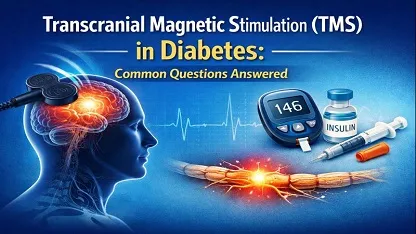
1. What is Transcranial Magnetic Stimulation (TMS)?
TMS is a non-invasive treatment that uses magnetic pulses applied to the scalp to gently stimulate specific areas of the brain. It does not involve surgery, injections, or medicines.
2. Why is TMS being studied in people with diabetes?
People with diabetes often develop nerve damage (neuropathy) that causes pain, numbness, or tingling. TMS is being studied because it can change how the brain processes pain and nerve signals.
3. How can the brain affect nerve pain in the feet or legs?
Pain signals from damaged nerves travel to the brain. The brain controls how strong or weak those pain signals feel. By stimulating certain brain areas, TMS can reduce pain sensitivity.
4. Can TMS help relieve diabetic nerve pain?
Yes. Studies show that repetitive TMS (rTMS) can significantly reduce burning, tingling, and shooting pain caused by diabetic nerve damage, especially in the legs and feet.
5. Does TMS work for patients whose pain medicines are not helping?
Yes. TMS is especially useful for patients whose pain is not well controlled with medicines or who experience side effects like sleepiness or dizziness from drugs.
6. Is TMS a surgery or does it require anesthesia?
No. TMS is completely non-surgical and does not require anesthesia. The patient remains awake and alert during the procedure.
7. What does a TMS session feel like?
Most patients feel a light tapping or tingling sensation on the scalp. It is generally comfortable and well tolerated.
8. How long does a TMS treatment session take?
A typical session lasts 20–30 minutes, and patients can return to their normal activities immediately afterward.
9. How many sessions are usually needed?
Most studies use 5 to 10 sessions over 1–2 weeks. Pain relief may start within days and can continue after treatment ends.
10. Can TMS improve nerve function, not just pain?
Research shows that TMS may improve nerve conduction and nerve signaling, suggesting a possible role in nerve protection and recovery, although it is not a cure.
11. Does TMS help with numbness or loss of sensation?
TMS mainly helps with pain and abnormal sensations. Improvement in numbness may occur in some patients, but results can vary.
12. Is TMS safe for long-standing diabetes patients?
Yes. Clinical studies show TMS is safe and well tolerated, even in patients with long-term diabetes, when done under medical supervision.
13. Are there any side effects?
Side effects are usually mild and temporary, such as scalp discomfort or mild headache. Serious side effects are very rare.
14. Who should not receive TMS?
TMS is not recommended for people with a history of seizures, metal implants in the head, and cardiac pacemakers or implanted electronic devices. Your doctor will screen for safety before treatment.
15. Can TMS reduce depression linked to diabetic nerve pain?
Yes. TMS is already used to treat depression and may help improve mood, sleep, and quality of life in patients suffering from chronic diabetic pain.
16. Can TMS help with diabetes-related dizziness or heart rate problems?
TMS can influence the autonomic nervous system, which controls heart rate and digestion. However, its role in these symptoms is still being researched.
17. Is TMS a replacement for diabetes medicines or insulin?
No. TMS is an add-on therapy. Patients must continue their regular diabetes treatment, including insulin or oral medicines.
18. Is TMS a permanent cure for diabetic neuropathy?
No. TMS does not cure diabetes or nerve damage, but it can significantly reduce pain and improve daily functioning.
19. Is TMS widely available for diabetic patients?
TMS is becoming more available, mainly in specialty pain clinics and neurology centers. Its use in diabetic neuropathy is still emerging.
20. What should I discuss with my doctor before considering TMS?
Ask your doctor about whether TMS is suitable for your condition, expected pain relief, number of sessions needed, and safety with your medical devices or medications.